

For years, Facebook Ads was the go-to channel for thousands of brands looking to scale through surgical targeting and reasonable costs. But 2026 tells a different story: saturation, rising prices, less control over privacy, and performance that’s no longer as consistent as it used to be. This isn’t just a feeling — there’s data to back it up.
In this article, we break down exactly what’s happening with Meta Ads, why so many brands are looking for alternatives, and which channels are proving to be truly viable. And yes — among them is one that’s been quietly growing and looks very promising for those seeking quality audiences without yet another algorithm in the way.
Why Facebook Ads Is Losing Its Edge (And Why It’s Not Your Brand’s Fault)
The rising costs on Meta aren’t an industry rumor — they’re a fact. The cost tracking published by Gupta Media placed the average CPM for Facebook and Instagram at $8.17 in October 2025. TikTok, by comparison, was in the $4.20 to $9 range. It’s not that Facebook is “expensive” — it’s that its ad space is full and the bidding reflects it.
On top of that, the landscape has changed. Stricter privacy regulations in Europe are forcing Meta to adjust its targeting approach. The European regulator’s decision against profile-based advertising is just one more example of a context that’s cutting back options that once seemed limitless.
There’s also a quiet phenomenon that doesn’t get much attention: who is actually seeing Facebook ads. Business Insider published a 2025 analysis showing that impressions are more concentrated than ever on older users, particularly between the ages of 45 and 54. Meta is optimizing toward whoever generates the most revenue, but that means some brands are losing real reach among younger segments.
All of this has led to a logical consequence: return on investment is more fragile. The incremental impact of campaigns isn’t as high as it seemed. An academic study from Northwestern University showed that, for mid-funnel results, the real effect of campaigns hovered around 18% when properly measured. Less magic, more reality.
This doesn’t mean Facebook Ads has stopped working. It means it can no longer be the only pillar. And that’s where the alternatives come in.
Where Brands Are Heading in 2026
When brands look for alternatives, they usually don’t do it on a whim — they do it out of necessity. Because if you’re spending thousands of euros every month on a channel that depends on an algorithm you don’t control and that keeps getting more expensive, you need some breathing room. And sometimes that breathing room comes in the form of new platforms where you can grow again without fighting constant saturation.
In 2026, the most common moves are happening in these directions:
TikTok Ads
You don’t need to be a youth-oriented brand for TikTok to work, but you do need to understand that creativity rules. Costs remain relatively competitive, and the ability to generate real attention is hard to match. That said, it requires its own language.
Google Ads and Performance Max
Works especially well when there’s search intent. It doesn’t replace Facebook Ads, but it complements it when you need more sustained conversions based on what users actually want — not just what the algorithm decides to show them.
LinkedIn Ads
For B2B, it’s still the most consistent channel. Expensive at times, yes, but with professional targeting that can’t be replicated on other platforms.
It’s not massive, but for sectors like home decor, fashion, DIY, or food, it’s a steady traffic source with users who come to get inspired… and to buy.
Reddit and Niche Communities
This isn’t a “volume” channel — it’s an affinity one. But anyone who’s tried Reddit with good content knows that communities can become an unexpected ally when the product fits.
TV
Not for every budget, but many brands are rediscovering the idea of “TV-level impact” without the costs or formats of the past. It’s a space where competition isn’t yet deafening.
And of course, there’s a channel that keeps growing steadily because it brings back something that seemed forgotten: real attention.
The Email Comeback: Why Newsletters Have Become a Serious Alternative
Talking about newsletters today isn’t about “bulletins” or “promotional emails.” It’s about spaces where people go because they want to, where the relationship doesn’t depend on an algorithm, and where the content gets a level of attention that other platforms can no longer offer.
Email marketing has been delivering an ROI well above average for years. Studies cited by Admailr report $36 for every dollar invested, and Passendo raises it to $38. These are striking numbers, but not surprising if we understand that we’re dealing with a channel that depends less on technological volatility and more on the direct relationship.
But beyond ROI, what attracts brands is the combination of niche audiences + reader trust. In a saturated feed, attention is a scarce resource. In a newsletter, the reader is there because they want to be. That difference completely changes how a brand can communicate.
Moreover, newsletter sponsorships don’t feel like a banner hidden between content churned out at full speed. They feel like part of the dialogue between creator and reader. And that has value.
There are public testimonials that open the door to interesting numbers. In a case shared on Medium, a sponsorship generated a 500% increase in clicks and three new clients in just two weeks. It’s not magic — it’s affinity. And when it clicks, it works.
Of course, the challenge lies in finding the right fit, because not all newsletters suit every brand. And that’s where specialized platforms like Niusleters are starting to take center stage.
Which Channel Should You Try First?
The easy answer would be “it depends.” But there’s a more useful way to frame it.
If your brand is looking for volume and quick awareness, channels like TikTok or CTV might be worth exploring. If you need to capture purchase intent, Google will remain strategic. And if you’re looking for spaces where your message doesn’t have to compete with twenty other ads on screen, newsletters have become a very solid option.
What all brands diversifying in 2026 have in common is the same thing: they want to regain control. The feeling that their investment doesn’t depend on whatever mood the algorithm is in this week. And that means building a more balanced channel mix where Facebook Ads is an ingredient — not the entire recipe.
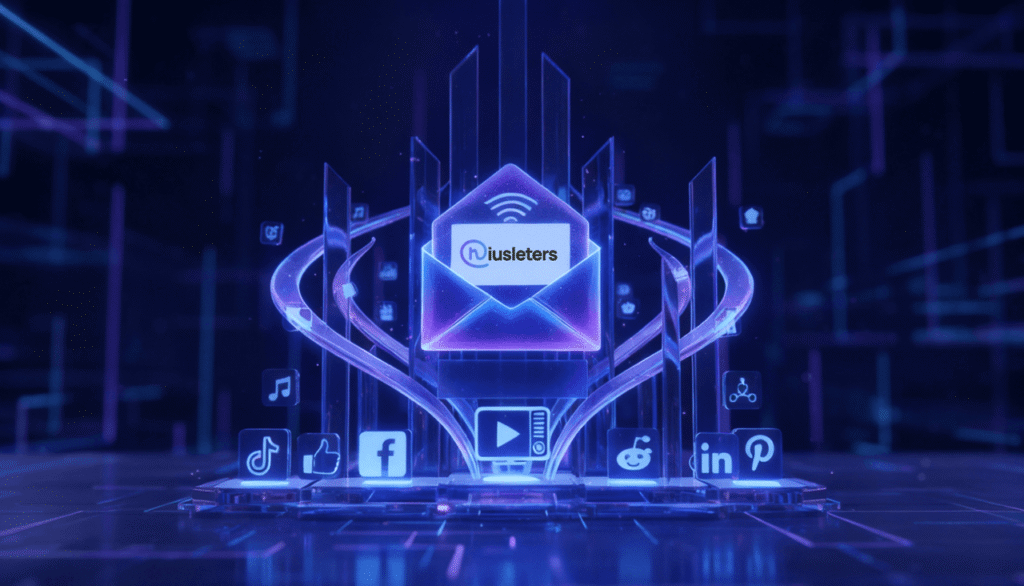
Facebook Ads hasn’t died, but it’s not the channel it used to be either. Rising costs, privacy restrictions, and audience fatigue have led many brands to explore more sustainable alternatives. TikTok, Google, LinkedIn, Pinterest, Reddit, and CTV are offering opportunities that didn’t exist a few years ago… but newsletters have proven to be one of the few channels that can deliver real attention without relying on an opaque machine.
If you’re at the point where you need to open new doors and recover margin, it might be a good time to explore options like newsletter sponsorships. Platforms like Niusleters can help you find spaces where your brand fits naturally and connects with audiences that actually want to hear what you have to say.