


This summer, Google sent Tom Orbach, the author of Marketing Ideas, 415 new subscribers. Substack sent him 20,444, and he didn’t post a single Note.
Those are his numbers, with his audience, so don’t expect the same next week. What’s interesting is where they come from, because a good part of growth on Substack depends on a free feature anyone can use, even with 200 subscribers. We’re talking about Recommendations.
Here’s how to use them, plus the part that doesn’t get talked about much, because a bigger list isn’t always a better one.
How they work
From your dashboard, you pick other newsletters you want to recommend. Substack then shows them in several places. The most important one is right after someone subscribes to your newsletter, when they can sign up for the ones you recommend in a single click. They also appear on your homepage, on your profile and in occasional recommendation emails.
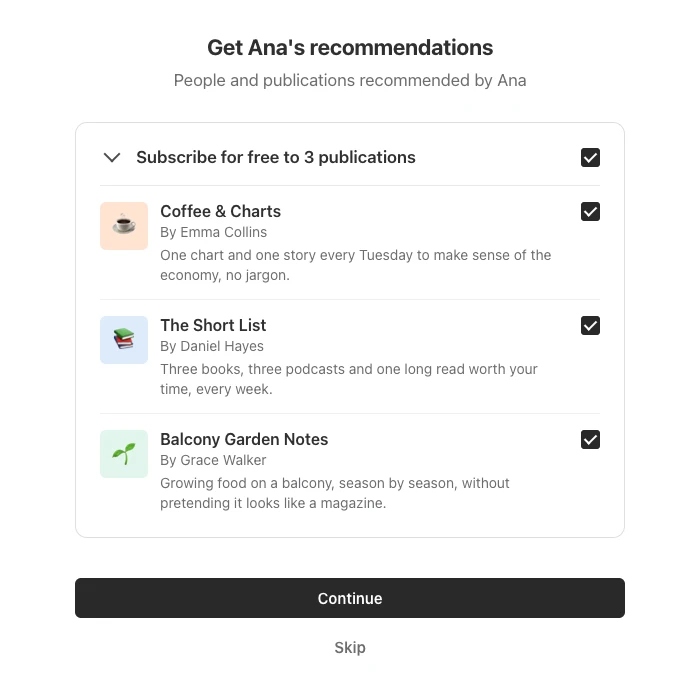
It works the other way around too. If another newsletter recommends you, anyone who subscribes to it can end up subscribed to yours.
Substack says Recommendations, together with its app, drive 50% of all new subscriptions on the platform. That’s the company’s own figure from 2024, so take it for what it is. Still, there are cases pointing the same way. The clothing brand M.M.LaFleur moved to Substack partly because of this, and more than 70% of its new subscribers now come from recommendations.
How to turn them on
Go to your dashboard, open Audience and then Recommendations, and add the newsletter you want to recommend. You can include a reason of up to 500 characters.
Please write one. “I love this newsletter” convinces nobody. “The only finance newsletter I understand without reading it twice” does.
Who to recommend
This is where most people rush, because adding newsletters at random gets you nowhere. We find these three criteria more useful than subscriber counts.
- You actually read it. You’re lending your trust to someone else. If you wouldn’t send it to a friend, don’t recommend it.
- Your subscribers already read it. Substack’s audience stats show you which other newsletters your subscribers read. The top of that list is where to start.
- It’s about your size. A small newsletter has more reason to notice you and return the favor than one with 200,000 subscribers. That’s our opinion rather than data, but it’s plain logic.
And you don’t need an endless list. PostHog, for example, recommends exactly ten. A few well-chosen ones also leave you with a real reason for each.
How to get recommended back
According to Substack itself, creators who recommend are three times more likely to get recommended. Careful here, because the people who recommend are probably also the most active ones, but the order is clear, you go first.
What you shouldn’t assume is that the other person will find out. Substack only emails them if they subscribe to your newsletter or once your recommendation brings them a meaningful share of their new subscribers. If neither happens within two months, they get nothing.
So you can tell them yourself. A short message on LinkedIn or by email is enough, with no obvious template and without turning it into a deal. Something like this.
Hi Marta. I’ve been reading your newsletter for months and today I added it to my Substack recommendations, because your edition on [topic] is some of the best writing I’ve seen on this. If you feel like taking a look at mine, it’s [link]. And if it’s not a fit, no problem, the recommendation stays.
That last sentence matters. Once recommending turns into swapping favors, you end up recommending people you don’t read, and your readers eventually notice.
Sometimes it goes really well. Tom Orbach says one of his recommendations sent more than 2,000 subscribers to a writer he’d never met, and that she has sent him more than 1,500 since.
The part that doesn’t get talked about
Someone who subscribes in one click while signing up for another newsletter has given it far less thought than someone who went looking for you. Some of those people probably don’t even remember subscribing.
There’s no serious study measuring how much this matters, but there are signs. How to Grow a Newsletter compared two newsletters, and the one with almost seven times fewer recommendation subscribers did better on opens, engagement and paid conversion. That’s only two cases, but it matches what several creators report.
And this affects you if you want to earn from sponsorships, because what you sell a brand is readers who open your email, not a subscriber count. Here’s an example with made-up numbers.
- You have 2,000 subscribers and 800 open. Your open rate is 40%.
- Recommendations bring you 500 more, and 15% of those open, so 75 people.
- You now have 2,500 subscribers and 875 opens. Your rate drops to 35%.
Using the benchmark of €100 per 1,000 real impressions, your sponsorship goes from about €80 to about €88. You’ve gained something, so the takeaway isn’t that recommendations are bad. But your list grew 25% and what you can charge grew 9%, and a brand looking at your open rate will see it went down.
That’s why we think being selective matters. A recommendation from a closely aligned newsletter brings people who will read you, and one from anywhere just pads the number.
How to tell if they’re working
Don’t just look at how many people arrive. These three things are worth checking once a month.
- Which newsletters send you subscribers. The Recommendations page in your dashboard shows how many come from each one, over the last 30 days and overall. It counts free subscriptions.
- What happens to your open rate. Compare it before and after. If your list jumps and your rate falls, look at where they came from. Opens aren’t a perfect measure, because people reading on the web or in the app don’t always count, so watch the trend rather than a single edition.
- Whether those people stay. If your dashboard lets you filter by source, compare their activity with the rest of your list. And every so often, clean out the people who never open anything, since they lower your rate and add nothing.
When they won’t help
If your newsletter is on pause, leave this for later. It’s very hard to get anyone to recommend something that hasn’t published in months, and whoever arrives that way will find silence. Substack also only includes you in its recommendation emails if you have at least three posts and have published in the last 30 days.
Don’t expect them to fix a newsletter that isn’t landing either. Recommendations bring people to your door, but whether they stay depends on what they find inside.
The recap
- Recommend first, and only newsletters you actually read.
- Start with the ones your subscribers already read, and write a specific reason for each.
- Tell them yourself, because Substack may not.
- Watch your open rate, not just how fast your list grows.
- Publish regularly before asking anyone for anything.
If you want more ideas for growing on the platform, we have a rundown of what’s changed and what’s working on Substack this year.
And once you have that loyal audience, whatever its size, sign up for free on Niusleters. We put you in front of brands that care about who reads you, not just how many of you there are.
Inspired by “Substack is a $0 cheat code for your brand” by Tom Orbach in Marketing Ideas.